
Faith is a very old concept, one that has been misunderstood by both atheists and religious people for centuries. There are countless writings, discourses, and books about faith. But still, to this day, no one seems to understand it. In fact, most people think it means the opposite of what it actually means.
In this post, I will explain how the common understanding of faith is wrong. I will then provide a more accurate definition of faith that agrees with its intended function as described in scripture.
The Wrong Definition
Most people today would probably say that faith is synonymous with belief. Many would probably go further and say that faith means to blindly believe something without evidence. If you look up faith in any dictionary, you will likely find a definition similar to this:
Faith is a firm belief in something without proof.
This definition of faith accurately portrays how most people understand it. It implies that having faith means being a blind follower.
But if faith means to be a blind follower, then it is dangerous and inadvisable. If we blindly accept creeds without evidence, then there is no hope of ever discovering the truth. When others disagree with us, we will have absolutely no way of changing their minds, just as they will have no way of changing ours. We each believe what we believe, but we can’t prove it. We have to either agree to disagree or settle the debate with violence.
If this is what faith is, then it is a massive hindrance to the discovery of truth and a major source of division and conflict. If this is faith, then Bertrand Russell was right when he said:
“We only speak of faith when we wish to substitute emotion for evidence. The substitution of emotion for evidence is apt to lead to strife, since different groups substitute different emotions. Christians have faith in the Resurrection; communists have faith in Marx’s Theory of Value. Neither faith can be defended rationally, and each therefore is defended by propaganda and, if necessary, by war.”
I hope you will agree that the commonly accepted definition of faith is wrong. Although it is the definition used by all the enemies of religion and by many ignorant religious people, I do not believe that is what God had in mind.
The Function of Faith
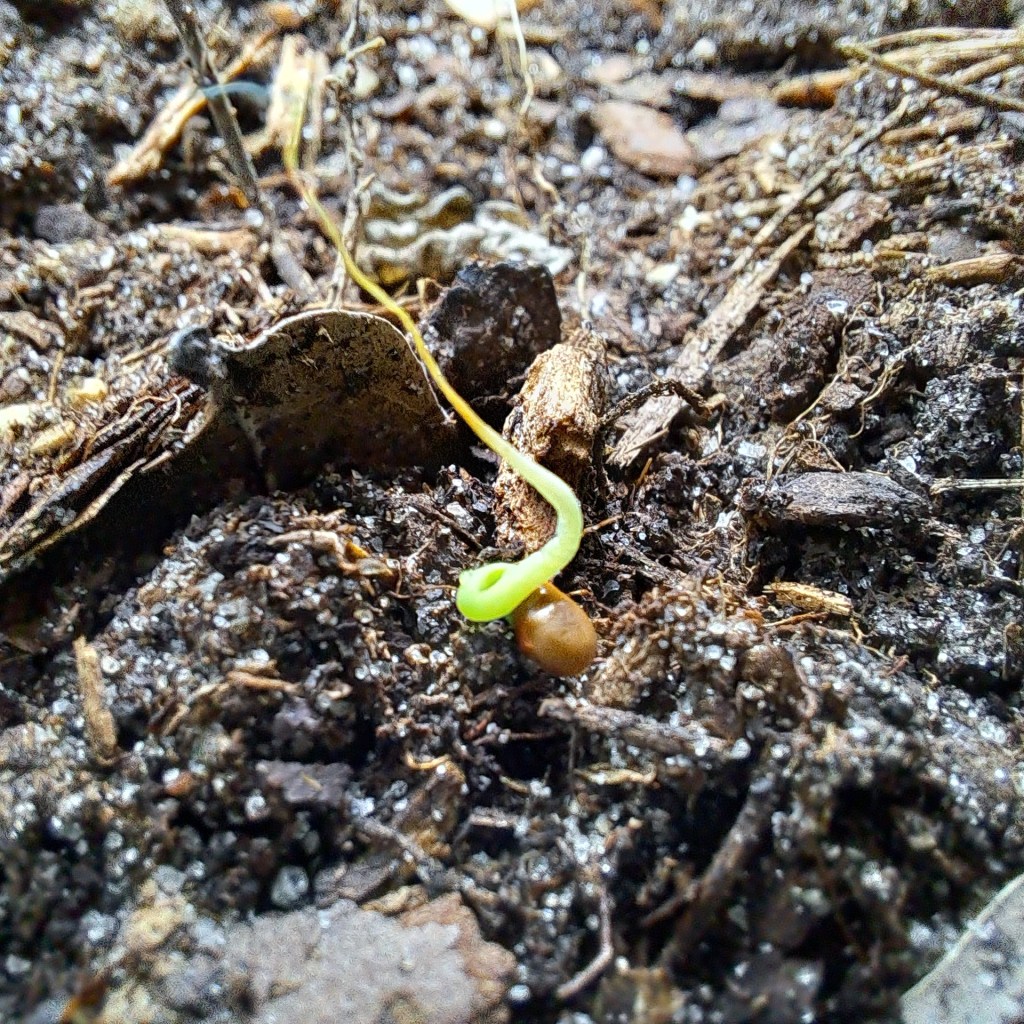
The scriptures speak of faith as an initial step in the discovery of truth, as is clearly seen in the prophet Alma’s metaphor of a seed that grows to become a tree. In Alma 32, the word of God is compared to a seed. Faith prompts us to plant the seed and nourish it, meaning that we try it out, study it, and practice it. If the seed grows, then we know that it is good. Eventually, if it gives fruit, then we will know that it is true.
According to Alma, faith is actually the driving force behind our search for truth. It drives us to experiment with ideas, and then to analyze the results, or fruits, of those ideas. This is not blind belief; it is exactly the opposite. What Alma is describing sounds like open-minded inquiry. It is a principle of intentional action, based not on blindness, but on hope.
The connection of faith to hope rather than belief can be found in the scriptures. The prophet Alma said,
“And now as I said concerning faith—faith is not to have a perfect knowledge of things; therefore if ye have faith ye HOPE for things which are not seen, which are true.” (Alma 32:21)
The apostle Paul taught something nearly identical,
“Now faith is the substance of things HOPED for, the evidence of things not seen.” (Hebrews 11:1)
Both Alma and Paul are saying that faith is related to hope. The word “belief” is not mentioned in either of these well-known verses on faith.
Hope versus Belief
Let’s nail down some definitions in order to avoid confusion. First, let’s define “belief”:
Belief is the personal acceptance of something as true, with or without evidence.
In the case where one has no evidence, then it can be called “blind belief.” Next, we define “hope” as follows:
Hope is the personal acceptance of the possibility of something positive.
Notice the more open-minded nature of hope versus belief. Hope doesn’t assume anything, while belief does. Belief is a dead end, while hope begs for further inquiry.
For example, suppose you and two of your friends are lost in the woods. One friend blindly believes that a rescue team will find you. As a result, she is not worried at all. She calmly lies down to take a nap and asks you to wake her up when help arrives.
Your other friend firmly believes that you are all doomed. He is convinced that these are the last days of his life. He gives into despair, cries inconsolably, and starts scraping his final words onto trees and rocks. He prays for forgiveness and prepares for his inevitable death.
You, on the other hand, are more level-headed and realistic. You do not firmly believe in either option. Instead, you accept that both outcomes are possible, but you prefer the more positive outcome, which is that you will be rescued. In other words, you hope that help will come, but it is not guaranteed in your mind. This hope drives you to think and work to make the positive outcome more probable.
You analyze the situation. Your friends are unlikely to want to move, and it’s likely that moving could cause you to become even more lost. You decide the best course of action is to stay put and send a signal to civilization. You quickly get a fire going and send a smoke signal into the air. Because of your effort, help arrives within hours. Your hope became a reality because you demonstrated faith.
Faith versus Doubt
Based on what we have discussed so far, let’s define “faith” as follows:
Faith is the willingness or drive to work for something that is hoped for.
This definition perfectly fits the function of faith as described in the scriptures. According to this definition, when I say, “I have faith in God,” what I mean is, “I accept that God is a wonderful possibility that cannot be discounted, and this drives me to organize my life and my actions in accordance with that possibility.”
The opposite of having faith in something, is to completely ignore the possibility of it. This is called “doubt” or “unbelief.” It is functionally identical to blind belief in that it blindly claims something to be false without proof. The only difference between blind belief and doubt, is that doubt is usually understood to go in a negative direction.
The people who are criticized in the scriptures for being hard-hearted or stiff-necked had exactly that attitude. They assumed that the teachings of the prophets were false, without giving them any consideration. They presupposed that they were false. Nowadays, that is called closed-mindedness. God wants you to do the opposite, to have hope, and accept the possibility that the doctrine is true. He wants you to try it out and see for yourself, and “not cast it out by your unbelief.”(Alma 32:28)
Conclusion
Blind belief is the total acceptance of a particular idea without proof. Blind belief is bad. Faith is not blind belief. Faith is the willingness or drive to work for something that is hoped for, where hope is the acceptance of the possibility of something good. Doubt, or closed-mindedness, is a negative form of blind belief, consisting of the rejection of possibilities without proof.
Hope is the first step in the process of learning or obtaining something. If you try to obtain it, then you are demonstrating faith. If you don’t try, then you are giving in to doubt and unbelief and showing that you are closed-minded. On the other hand, you might blindly believe something because it sounds nice and you are too lazy to investigate it. Both doubt and blind belief stunt your progress and can lead to negative consequences.
If you simply doubt, and move on, then you lose the opportunity to learn the truth. You are being like the “way side” in the Parable of the Sower, where “some seeds fell by the way side, and the fowls came and devoured them up.” (Matthew 13:4)
On the other hand, if you simply believe, without doing anything, then you similarly fail to learn anything. Your current opinion is very weak and indefensible. You have no testimony to share and no way to convince others that you are right. You are being like the “stony places, where they had not much earth: and forthwith they sprung up, because they had no deepness of earth: And when the sun was up, they were scorched; and because they had no root, they withered away.” (Matthew 13:5-6)
It is better to have faith. Be the good ground in the parable. As Jesus himself said,
“He that received seed into the good ground is he that heareth the word, and understandeth it…” (Matthew 13:23)
Don’t be blind. Seek to understand. Investigate the possibilities without prejudice. Work for what you hope for. This is the way to knowledge. This is the way to miracles. This is faith.


 Truth Reconciled