

Introduction
Before the year 1905, space was generally believed to be fixed and firm, and time was believed to march forward at a constant, immutable, universal pace. Any given time interval was expected to be exactly the same everywhere. If exactly 2 minutes passed on Earth, then exactly 2 minutes must have passed on Mercury. If we turned on 2 lights at the same time, it was common sense that any other observer would also conclude that they were turned on at the same time. In other words, physics matched our natural intuition of how the world works.
The old paradigm was shattered when Albert Einstein published his Special Theory of Relativity. It was met with much skepticism at first, but eventually gained near universal acceptance among physicists. Our understanding of space and time was forever changed. For many people, this updated view of reality was so strange that it seemed unbelievable and paradoxical. And yet, as I will demonstrate in this post, it comes as a direct result of the fundamental and highly intuitive law of causality.
Special Relativity
The main two postulates that form the foundation of special relativity are:
- The laws of physics are the same everywhere, independent of the location and velocity of any observer.
- The speed of light c is constant, independent of the relative motion of its source.
The first postulate is not too far-fetched for most people. The truth is the truth, no matter what. It doesn’t matter who you are or where you are or how fast you’re going. The underlying truth that governs the universe should be universal.
The second postulate has historically been more difficult for people to accept. Imagine two people can each throw a baseball at a speed of 40 mph. If they are both standing on the ground, and we are standing next to them, we will measure the speed of both baseballs to be 40 mph. But if one of the baseballs is flung at 40 mph from atop a platform that is moving forward at 40 mph, you will measure the ball’s speed to be 80 mph. Not so with light. Instead of throwing baseballs, try turning on flashlights. No matter how the flashlights are moving relative to you and relative to each other, you will always measure the speed of the emitted light to be c. It can’t possibly be anything different.
The two postulates of special relativity inevitably lead to the fact that time is relative, and this brings with it all the seemingly paradoxical effects of special relativity. For example, one person in one reference frame can move faster through time than another person in another reference frame. Two events that are observed to be simultaneous by one observer are not guaranteed to be simultaneous in the reference frame of another observer. The lengths of objects become contracted when they are moving relative to each other. Additionally, nothing can travel through space faster than the speed of light c.
Special Relativity appears to be a universal law of local spacetime. It is one of the few unifying laws of physics that connects quantum theory and general relativity. Quantum fields that describe the real universe are always defined on a spacetime background that obeys special relativity at small scales. General Relativity allows for complicated, curved spacetimes at large scales, but if you zoom in on any spacetime that is meant to describe reality, it will always look like flat spacetime obeying special relativity. This is similar to the spherical earth, which appears flat when you zoom in and focus on a very small area.
Causality
Another apparently universal law of physics is causality. Causality means that any event that causes a secondary event must precede the secondary event and cannot be affected by the secondary event. In other words, if A caused B, then A happened before B. It’s very simple and readily accepted by almost everyone.
Causality is the inevitable result of the concepts of past and future. The past is the past. It already happened. It is fixed and cannot be changed. The future is not yet determined, and is free to become whatever we make of it. The law of causality is equivalent to saying that the freedom of the future cannot be used to change the fixed past, because doing so would cause a contradiction.
Disregarding causality always leads to contradictions. This is very common in sci-fi movies. Imagine if you had the ability to go back in time and stop your parents from meeting. Your birth came as a consequence of a chain of events that includes the moment your parents first met. Clearly, causality states that you could not be present at the moment they met because that moment causally preceded your physical existence. If you break causality, and cause them to not meet each other, then you could not be born as their child. It follows that you could not go back in time to try and stop them from meeting because you wouldn’t exist.
The example above constitutes a proof by contradiction. Causality is a logical necessity. The funny thing is, this simple and easily acceptable idea of causality, combined with the self-evident first postulate of relativity, actually implies the second postulate of relativity and all the “weirdness” that comes with it.
The Proof
The proof of this connection requires some basic knowledge of mathematics and physics. To start, we need to consider at least two events, where one caused the other. Let’s say event A caused event B. We assume these events exist in space and are separated by time. Since event A caused event B, causality tells us that A came before B in time.
In theory, we are free to draw any coordinate system we want on this spacetime. We can draw a time axis labeled t and a space axis labeled x and orient them however we want. The coordinate system is arbitrarily imposed by us to describe the system, and as such it should have no effect on the underlying laws of physics. But that’s the catch, if we don’t want to affect the laws of physics, then the possible coordinate systems are limited to those that agree with the underlying physics.
In this case, the restriction imposed by the law of causality limits our options because A must precede B along the time axis. We can determine exactly which set of spacetime parameterizations are allowed by transforming one arbitrary parametrization into another and requiring that the causal ordering of events be preserved. We’ll keep things linear because we can.
We define the time difference 


Since A causally precedes B, the law of causality tells us that the time coordinate of A must always precede that of B. Mathematically, 


This relationship must hold for any value of

where we have defined 
If we define the velocity of the propagation from A to B as 


Events for which the inequality is reversed (
Let’s now consider the case where A and B are null separated instead of time-like separated. The inequality becomes an equality.

If we apply an alternative transformation to 


where 

In other words, the speed of the null propagation between two events at the limit of causality’s reach is the same for every observer. This is the constant speed of light. We have obtained Einstein’s 2nd postulate of special relativity.
Conclusion
Many people have difficulty accepting the physics of special relativity because it disagrees with their physical intuition. We live and interact with each other at a particular scale and at particular speeds in which the non intuitive effects of special relativity are never apparent to us. Causality, on the other hand, is very apparent to us and aligns perfectly with everyone’s intuition. What I have demonstrated here, is that if causality is true, which it must be in order to avoid contradictions, then space and time must obey special relativity. So, perhaps it is not as non intuitive as we thought.

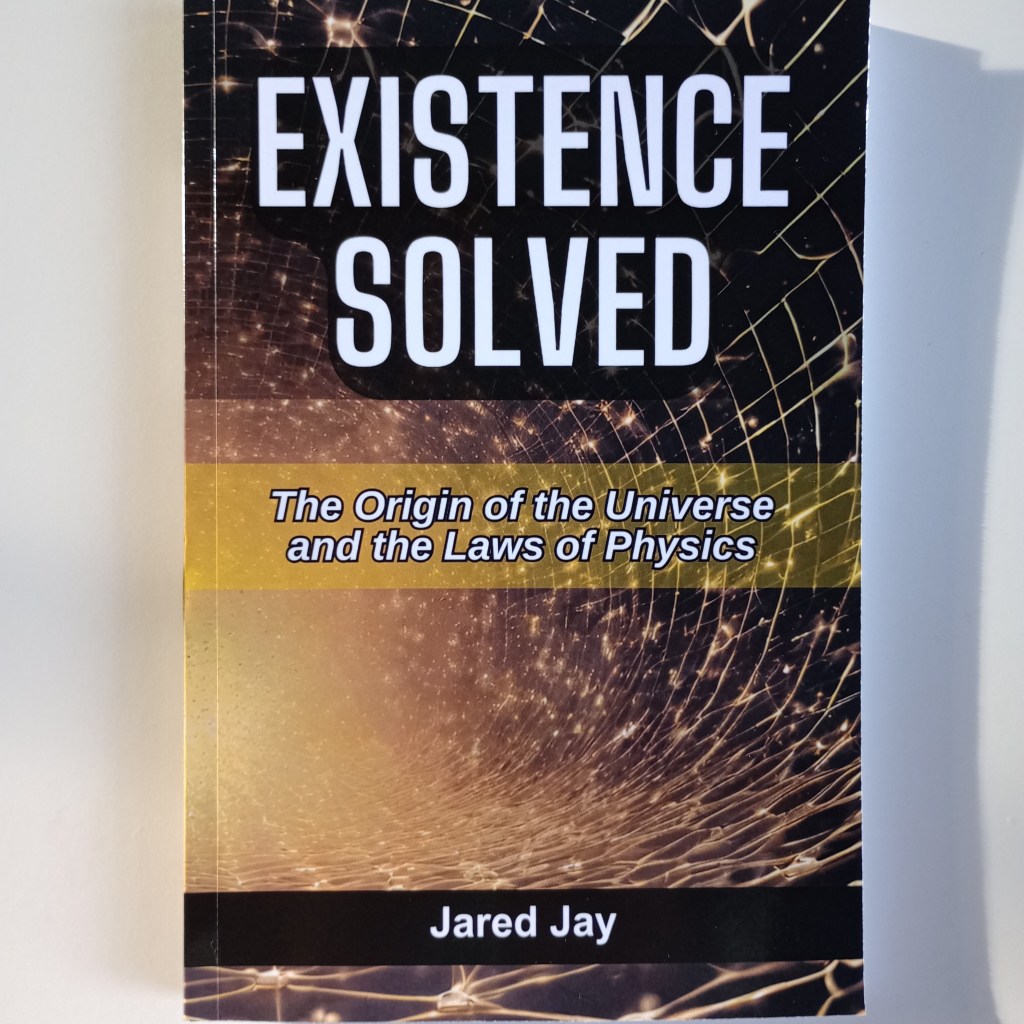
 Truth Reconciled