

The following is a list of seven of the deepest questions that have been asked by humanity throughout the ages. A brief, one-line answer is given to each, followed by a longer explanation of the answer. You will have a hard time finding these answers anywhere else.
- Do we have free will?
- Yes.
Randomness is one of the fundamental characteristics of existence. All quantum systems experience randomness. Many will argue that quantum randomness disappears at human scales, but this is simply not true in complex systems.
Those who are familiar with the concept of chaos know that something as simple as a double pendulum exhibits total unpredictability. Although the Newtonian double pendulum is technically deterministic, any arbitrarily small difference in the starting point of the system will result in a completely different future. Chaotic systems thus have the capacity to take quantum-scale randomness up into macroscopic scales. The classical three-body problem is another example of a simple chaotic system.
If these simple systems can exhibit quantum randomness at a macroscopic scale, imagine the level of randomness that exists in a system as complicated as the human mind. Your brain is a biological neural network consisting of billions of neurons that communicate through signals at the quantum scale. One small variation in one of those signals could result in an entirely different train of thought, and thus different behavior. Because of the inherent randomness of the quantum realm and the chaos of complex systems such as this, the human mind undoubtedly possesses true freedom.
2. Is there objective moral truth?
- Yes.
Morality is defined as the rule or set of rules that tell intelligent beings what should be done in any given situation. Without making any assumptions, we can already conclude the following self-referential law of morality:
Morality mandates that we should follow morality.
This is the first objective moral truth. It is tautological, and thus undeniable. Many other objective moral truths follow from the application of this self-promoting tautological principle to the human condition.
A thorough derivation of the Tautological Theory of Morality is given in the book Objective Morality: The Logical Foundation of Good and Evil. A brief overview of the argument can be found in my article Objective Morality Exists.
3. Why is there something rather than nothing?
- The universe exists as a logical necessity.
The universe and all the laws of physics arise naturally from a foundation of absolute truth consisting of a set of logical tautologies. The most important is the Tautological Totalitarian Principle, which states the following:
If B exists, then A exists if and only if the existence of A does not contradict the existence of B.
In Quantum Field Theory, the totalitarian principle is often presented as,
Anything that is not forbidden is compulsory.
This is also equivalent to Leibniz’ Doctrine of the Striving Possibles, presented in 1697, which states that all possibilities naturally strive towards existence.
Leibniz proved the principle a posteriori, based on observation. The physicists who developed Quantum Field Theory assumed the principle in order to get the right answers. We now know it to be an absolute truth a priori. This principle provides the “existential force” that drives all possibilities towards existence.
In combination with the Tautological Principle of Natural Selection, the totalitarian principle also provides the “existential filter” that filters the possibilities into those that do not contradict each other and maintain stability. The entities that pass the filter make up the building blocks of the universe as we know it. Space, time, quantum randomness, and all the laws of physics emerge naturally through the endless, iterative application of timeless logical principles.
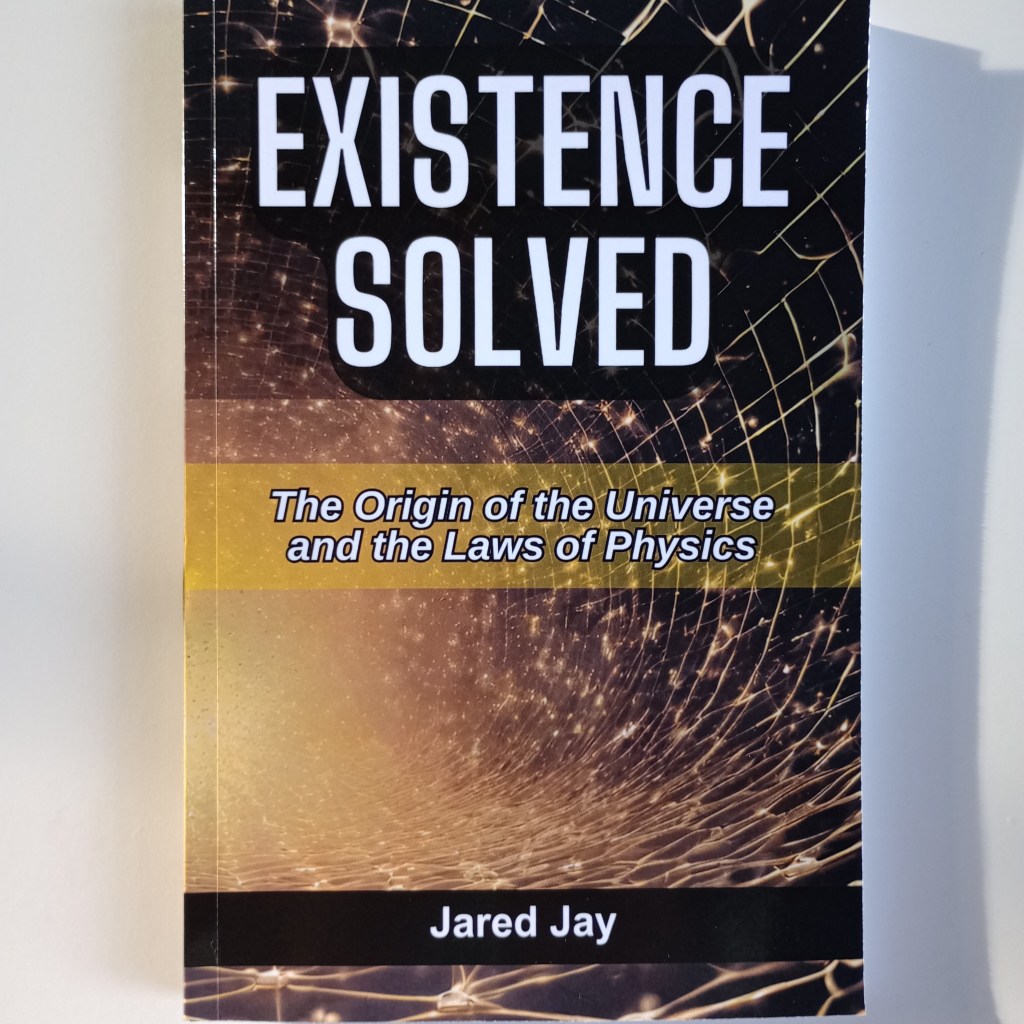
The most thorough presentation of the Tautological Theory of Existence is in the book Existence Solved: The Origin of the Universe and the Laws of Physics. A brief overview can be found in my article Explaining the Existence of the Universe.
4. Does God exist?
- It is highly likely, and there is no downside to believing.
If we consider God to be a great overarching intelligence that is omniscient and omnipresent throughout the universe that creates and governs all things, then God is equivalent to the fundamental laws of nature which are grounded in absolute truth. This God, which is truth itself, exists necessarily without a doubt.
If, on the other hand, we consider God to be the being in the Bible who spoke to prophets and had the form of a man, then his existence cannot possibly be proven by logic, but only by observation. This is analogous to proving the existence of any famous person whom you have heard of but never met. Their existence does not follow from pure logic; you have to observe the influence of their particular presence in the universe.
There are many religions that claim divine influence, and the authenticity of many of these claims is impossible to prove or disprove with absolute certainty. Thus, there are many observations that might serve as reasonable evidence of God. One of these stories of divine influence is the life, death, and resurrection of Jesus of Nazareth, and the subsequent zeal of his followers. Another example is the origin story of the Book of Mormon, which has withstood 200 years of assault from nonbelievers.
The doctrines of some religions agree entirely with nonreligious scientific and humanist paradigms on every aspect of reality that can possibly be observed. Therefore, there is no observable evidence that could possibly disprove the existence of the Biblical God. The evidence thus seems to be in God’s favor for those religions.
We do know from the logic of the Tautological Theory of Morality that perfectly moral, godlike societies are inevitably generated over time in this universe, and thus the question of whether the Biblical God exists becomes,
“Are we the first such society to develop in this region of the universe?”
If this question follows the pattern of all the previous “center-of-the-universe” ideas, then the answer is likely no. It follows that the God in heaven is probably real and that he and his society are morally perfect. If he is not real, then he represents how we will be in the distant future when we interact with less developed intelligent beings.
Furthermore, the fact that God is believed by almost all modern religions to be morally perfect, means that following him and trying to be like him is objectively good. Even in the unlikely case that God does not exist, believing in his existence will have a net benefit on society, providing a greater incentive for moral development. There is no downside.
5. What is the nature of the self?
- It is an eternal abstract intelligence manifested as a complex self-aware physical network.
We know that all of existence consists of fundamental entities that have a quantum nature of indeterminacy and randomness, and that interact with one another. These interacting entities tend to form collective, complex, stable networks that obtain many emergent properties, and that maintain a kind of separateness from other stable structures. The self is one such structure that has obtained the property of self-awareness. The hardware of the self is the physical body, and especially the central nervous system.
The abstract self can be defined by the inclinations of the entire physical system, or in other words, how the physical body is likely to respond to any possible stimulus. Any new physical realization of the abstract self would behave in a way that is effectively identical to the original self, to the point that it would truly believe that it is the original self. In this sense, the abstract self is the true self, and it can be identified with what is traditionally called a “spirit.” The abstract self is a mathematical structure, and is therefore eternal.
The physical self is mutable, meaning it can change over time, and thus change which immutable abstract self manifests within it. In this sense, in your physical state, you truly have the opportunity to choose who you will fundamentally be. When we die, our true self will continue to exist forever, as it always has, and it could potentially be reanimated in a new physical form. With the development of artificial intelligence and robots, it is becoming easier to see how the abstract intelligence of a living thing can be made alive again after death, especially those intelligences that have been “saved” for re-use.
6. How should we live?
- We should live our lives according to objective morality.
Any other claim about how we should live carries no authority whatsoever. Morality is defined as the rule or set of rules that tell us what should be done in any given situation. There is no rational justification for acting contrary to morality.
In practice, this means that we should value life and liberty among humans above all else, and we should strive to know what is right and do what is right. This is because the first objective law of morality is that morality should be obeyed. Since morality can only be practiced among intelligent beings who are alive and free to make choices, it follows that life and freedom are of the greatest value. If we are alive and free, then our first duty is to learn what morality entails and pursue it.
In addition, we should cultivate perfect love towards all, no matter who they are or what they do. We should strive to be truly happy no matter our life circumstances. We should be willing to help others in need, and we should never desire to hurt or steal. We should reserve all sexual behavior for marriage and be completely faithful to our spouse. We should forgive all mistakes, including our own. All of these conclusions follow from the logic of the Tautological Theory of Morality presented in the book Objective Morality: The Logical Foundation of Good and Evil.
7. What is the meaning of life?
- We exist to obtain true happiness for ourselves and our loved ones through moral progress.
The question of the meaning of life is a strange question. If you are asking what “life” means in general, then it just depends on your definition of the word. It seems to me that what most people mean when they ask this question is actually “What is the purpose of life?”
The idea of a purpose of life implies the existence of an objective goal of human life. In other words, the question is really asking, “What should I strive for?” This is a moral question, and objective morality provides the objective answer: we should strive to be moral. From the Tautological Theory of Morality, we know that true happiness is tied to moral behavior. Thus we can say that the purpose of life is to strive to be good, and to obtain true happiness for yourself and your loved ones.


 Truth Reconciled